Before the First Stem: A Planner’s Guide to Venue Water Quality
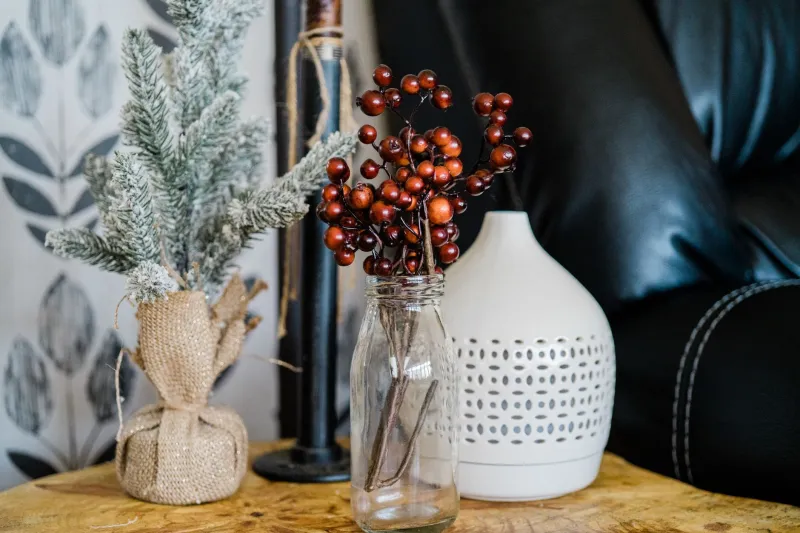
There is a particular kind of disappointment that arrives the morning after a winter install. The branches were fresh, the vessels were clean, the colours worked beautifully in the room — and yet the water has gone cloudy, the stems have slumped, and the whole arrangement looks tired before the first guest has hung up a coat. More often than not, the culprit is not the foliage. It is the water.
In the UK, tap water is a bit like the weather: perfectly normal in one postcode and noticeably different in the next. A venue in chalky Hampshire is working with a very different liquid from a village hall in the Welsh valleys or a converted mill in Yorkshire. For anyone styling with seasonal stems, branches and table arrangements, that variation is worth understanding. It is not glamorous, but it is one of the quiet differences between a display that holds for a week and one that gives up by Thursday.
Why hardness matters more than most people expect
Hard water carries dissolved calcium and magnesium. It is not dangerous, and it is not a plumbing disaster, but it does affect how stems take up water. Those minerals can collect around a cut stem, gradually sealing the end and making it harder for the plant to drink. In a vase, that often shows up as drooping heads, curled leaves or a general look of sulking.
Hard water also leaves its mark on the vessel. Clear glass can develop a faint film. Metal buckets can spot. Pale ceramic urns can look slightly chalky around the waterline. None of this ruins an arrangement, but it does undermine the softly lived-in look that natural styling is supposed to have. A cloudy vase reads as neglected, even when the flowers themselves are fresh.
Soft water is not automatically a free pass, either. Water that has been softened at the tap may contain higher levels of sodium, which many stems dislike. Rainwater is often kinder to foliage, but it is not always practical to cart around for a large event. The useful question is not simply ‘hard or soft?’ but ‘what is this particular tap doing, and what can I do about it?’
A five-minute check before you commit
When you are working in a new venue, do not wait until the morning of the install to think about water. Ask the facilities team or venue manager a few plain questions: Is the water softened? Is there a filtered tap? Does the kettle scale quickly? Those small clues tell you a lot.
If you want something more concrete, a basic TDS meter — the kind used for checking dissolved solids — is inexpensive and fits in a glovebox. It will not give you a full laboratory report, but it will flag whether a venue’s water is notably mineral-heavy. Test strips for hardness and pH are similarly cheap and easy to keep in a kit bag. For home stylists, the kettle is often the most honest test: a thick crust of limescale after a few weeks suggests the tap is on the hard side.
It is also worth running the cold tap for a minute before filling a sample. Water that has been sitting in the pipes can give a misleading reading. And if the venue has recently had work done, or the water smells faintly of chlorine, note that too. Stems are not fussy in a dramatic way, but they do notice.
What hard water does to winter ingredients
Winter styling often relies on woody stems, evergreens, berries and dried or semi-dried elements. Some of these are tougher than they look. A cut branch of birch or a bunch of bay will tolerate more than a delicate spring stem, but it still needs a clean drink. Hard water can encourage the build-up of biofilm in warm rooms, especially where vessels are filled and left for days. That slippery film is not just unattractive; it can shorten the life of the arrangement.
The effect is often most visible in glass. A clear vase is a beautiful thing, but it is also a magnifying glass for water quality. In hard-water areas, the inside can start to look milky within a few days. Darker vessels and opaque ceramics are more forgiving, which is one reason they are useful for events where the water will not be changed daily.
Low-cost fixes that fit a working routine
You do not need a laboratory or a floristry degree to improve your odds. Start with resting water. Fill clean buckets the night before an install and let them stand. Some of the chlorine will dissipate, and the water will come closer to room temperature, which is gentler on stems. It is a simple habit, but it is easy to forget when you are loading a van at 6am.
Conditioning cuts matter too. Cut stems at an angle with clean secateurs, and do it immediately before they go into water. If you are working with woody branches, a small vertical split at the base can help them take up water more readily. Keep vessels properly clean — not just rinsed, but washed with hot soapy water and dried. A faint residue of old water is a head start for bacteria.
Where water is very hard and the arrangement needs to last, consider using filtered water for the final fill, or a mix of filtered and tap water. Do not use softened water from a household softener for stems; the sodium is rarely helpful. If you are working with a venue that has a filter tap in the kitchen, use it. It is one of those small practical details that pays you back in fewer replacements.
Choose stems that shrug off the tap
Part of the answer is simply choosing forgiving ingredients. British-grown evergreens such as holly, ivy, yew and conifer offcuts are generally robust. Bay, rosemary and thyme bring scent and structure and tend to cope well with less-than-perfect water. Birch, hazel and willow give height without demanding special treatment. Berried ivy and skimmia can look wonderful in winter arrangements, though they benefit from clean water and a cool spot.
For table work, consider mixing living stems with dried elements that do not rely on the water supply at all. Dried grasses, seed heads and twiggy bundles can carry the arrangement if a few fresh stems are having a difficult week. That is not a compromise; it is a sensible way to style seasonally when conditions are not ideal.
Make it part of the planning, not an afterthought
The most useful change is to add water quality to the venue notes you already keep. Next to parking, access and power, write down whether the tap is hard, soft or filtered. Note where the nearest sink is, and whether there is space to rest buckets overnight. If you are a home stylist, keep a small jug of rested water in the utility room and a TDS meter in the drawer with the spare batteries and floristry wire.
None of this makes winter styling less creative. If anything, it protects the creative work. A beautiful arrangement is not just a collection of stems; it is a small system of vessel, water, light and time. Get the water right, and the rest of the display has a much better chance of holding its shape, its colour and its quiet, natural character — long after the last guest has gone home.