The Building Has a Say: A Pre-Styling Walk-Through for Old Barns and Village Halls
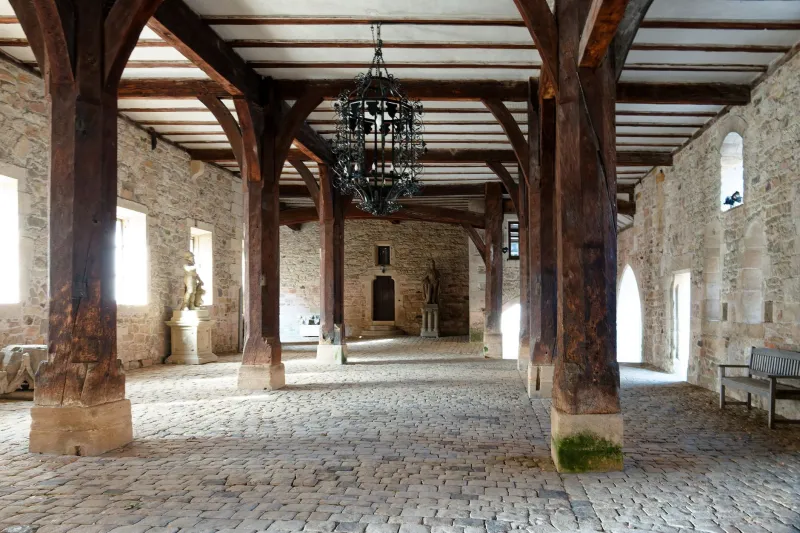
There is a moment, usually about ten minutes into a venue visit, when the room stops being a backdrop and starts being a collaborator. An old barn will tell you where the light falls, which door bangs, and which beam is not as sturdy as it looks. A village hall will tell you about the caretaker's rules, the radiator behind the top table and the fact that the fire exit cannot be blocked by a seven-foot arch. A natural stylist's job is to listen before the first stem is cut.
By mid-November 2026, with the clocks already changed and the light thinning by four o'clock, that listening matters more than ever. A scheme that looks generous in a bright showroom can turn sulky in a dim hall with a low ceiling and a draught under the door. So before you commit to branches, foliage and gathered materials, walk the venue properly. Not with a mood board in your head, but with a tape measure, a torch and a list of questions.
Start at the door, not the top table
The load-in route decides more than most stylists admit. Check the narrowest point between the van and the room: gates, gravel, steps, thresholds and the turn at the end of the corridor. A long branch that will not go round a corner is a problem no amount of ribbon can solve. Ask when deliveries can arrive, whether the main door will be locked, and whether you can use a trolley. In older buildings, the obvious entrance is sometimes not the one the caretaker wants you to use. Photograph the route and note where you can safely stack empty crates.
Read the light at the hour you will actually use it
Visit at the same time as the event if you can, or at least at the same time of day. Old barns often have small windows, deep reveals and dark corners; village halls may have fluorescent strips that flatten foliage or a single pendant that throws odd shadows across a table. Look at the colour of the light, not just the amount. Check whether dimmers work, whether sensors will switch off mid-setup, and where the sun will be at the start of the ceremony or meal. In November, a room that feels bright at two o'clock can be gloomy by four. Take a sample stem with you and hold it where the arrangements will sit. If it disappears against the wall, your scheme needs contrast, not more of the same.
Find the draughts before they find your foliage
Old buildings breathe, which is charming until it is moving your eucalyptus. Check door draughts, vents, high windows and gaps in cladding. Ask about the heating schedule: radiators and wood burners will dry out foliage quickly, and a warm blast every hour is worse for delicate stems than a steady cool room. Draughts also affect anything hanging. A lightweight installation that swings is not romantic; it is distracting. Dried grasses and delicate seed heads need still air. Candles need a still spot and a safe one. If the room is breezy, choose sturdier branches, heavier bases and fewer floating elements.
Touch the surfaces
Damp is the quiet enemy of natural styling. Run a hand along stone, limewash and old timber. Look for condensation on window tables, water marks on sills and crumbling plaster near the floor. Do not place damp moss or wet stems directly on historic surfaces; use slates, trays, felt pads or hidden risers. Check whether tables wobble on uneven floors and whether existing furniture can be moved. Some pieces in village halls are fixed, and some barn floors slope more than they appear to. A low arrangement that sits straight on a crooked table is worth more than a tall one that leans.
Fixings, beams and heritage rules
Never assume you can nail, screw or tie to a beam. Ask what previous hirers have used, and ask for it in writing if the building is listed or in a conservation area. Even a village hall can have conditions attached to its hire. Use freestanding arches, weighted bases and clamps with rubber pads where fixings are allowed. Keep away from pipes, cables, alarms and fire equipment. If you are hanging anything, check the load, the ladder access and whether the caretaker is happy for you to be up there at all. A beautiful beam is not a structural guarantee.
The village hall small print
Ask for the caretaker's number, the arrival and exit times, the cleaning arrangements and where the bins go. Find out whether there is a trolley, a stepladder, a sink and enough power sockets for your needs. Check the circuit load before you plug in anything warm or bright. Keep fire exits clear and check door swings; a generous arrangement can block a route without meaning to. Confirm whether you can store crates on site and whether the floor needs protecting. A short email after the visit is boring, but it saves arguments later.
Leave room for the room
A natural scheme should not fight the building. It should work with the light, the draughts and the restrictions, and leave a little space for the venue's own character. That might mean fewer branches, a lower centrepiece or a gathering of British foliage that looks at home against old timber. At Brook & Vine, we would rather spend an hour reading the room than an afternoon correcting a scheme that never suited it. Walk the venue first. The building has a say.