Soft Edges, Wet Weather: A Rain Plan for Natural Styling That Holds Its Shape

Photo: Paul Klee, Public domain, via Wikimedia Commons
The rain rarely arrives as a surprise, yet it always seems to land at the wrong moment — the hour before the doors open, when the van is half unloaded and the entrance arrangement is still leaning against a wall. In a British November, that is simply the arrangement we work with. What separates a scheme that looks composed from one that looks improvised isn't luck with the forecast. It's a plan that assumes water is coming, and decides in advance where it's allowed to go.
Start with the building, not the bucket
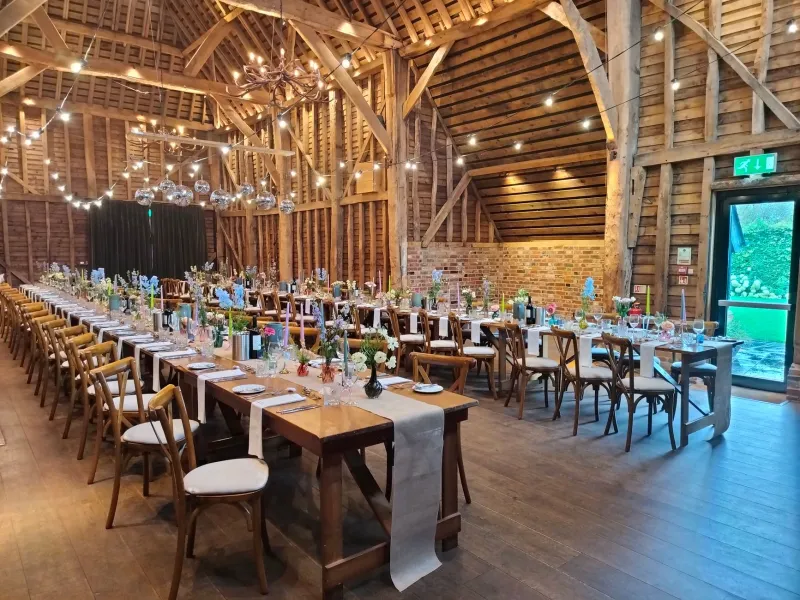
Before you think about stems, walk the venue the way a damp afternoon would. Old barns and village halls hold moisture in their own particular ways: stone that sweats, floors that stay cold underfoot, single-glazed windows that mist over by four o'clock and quietly change the whole colour of a room.
Run a hand along the wall where you intend to hang anything. If it feels cool and faintly tacky, fixings will leave marks and foliage pressed flat against it will brown before the speeches. Ask the caretaker where the doors will be propped, where coats will be dropped, and which corner collects the drips from a hundred umbrellas. That corner isn't a problem to be hidden. It's a location, and it deserves a design.
Materials that take a soaking and keep their manners
Most natural styling fails in wet weather not because it gets wet, but because it gets heavy. The trick is to lean on things that hold their silhouette once damp.
Moss is the quiet hero — it drinks and carries on. Ivy behaves similarly, provided it's given somewhere to drain. Conifer, yew and cedar keep their shape and their scent through a downpour. Berried branches such as hawthorn and cotoneaster look better for a little rain, the colour deepening rather than dulling. Birch, willow and bare twig work are almost indifferent to moisture, and dried hydrangea heads, seed pods and bracken will survive an install as long as they're not sitting in standing water.
What sulks? Soft open blooms, anything with a fragile papery petal, and — a common mistake — dried grasses used as a top note. They look wonderful in a dry porch and collapse into a limp fringe the moment the sky opens.
Build a hidden layer underneath
Good wet-weather styling is largely plumbing you can't see. Line containers with offcuts of pond liner or a sturdy waterproof sheet, then disguise the whole thing with moss or gravel. Set arrangements on trays, shallow crates or slate offcuts so drips land somewhere deliberate. Damp sand in a bucket holds stems steady and looks like a considered choice rather than a functional one.
Capillary matting under table runners saves a great deal of anguish. So does a simple rule: nothing porous touches the floor directly. The floor will be wet by six o'clock regardless; the question is whether anyone notices.
Study the threshold
Guests make up their minds about a room in the doorway, and the doorway is exactly where November is at its least cooperative. Rather than fighting this, give the threshold a job. A galvanised bucket as an umbrella stand, a zinc tray of gravel for boots, a bench with a folded wool blanket and a stack of cloths — these read as hospitality rather than housekeeping.
Coir matting layered with a woven runner works harder than it looks. If the entrance is exposed, a hop-up canopy or a simple garden cloche over the arrangement buys you hours. And keep one tall branch arrangement close to the door but out of the drip line, so the first thing a guest sees is green rather than grey.
Three swaps to keep in the van
Contingency doesn't mean thirty alternatives. Three is usually enough, and they should be chosen before you leave the workshop.
- Tall stems become branching. If the forecast turns, swap vertical blooms for branch work — it holds shape, dries gracefully and photographs well in low light.
- Textiles become wool. Linen napkins and cotton runners darken the moment they're touched by wet hands. Wool and boiled wool shrug it off and add warmth.
- Paper becomes fabric. Seeded card, place cards and paper lanterns are the first casualties. Ribbon, chalkboard and stitched fabric labels survive a damp room without curling at the corners.
Afterwards: give everything a drying room
When the last guest leaves, the scheme still needs an hour of your attention. Hang foliage loose rather than bundling it, so air moves through. Return moss trays to the outdoors where they belong. Air linen flat and don't fold it damp, or you'll be dealing with a smell that no amount of cedar will fix. Anything that spent the evening on a wet floor should be wiped, dried and stored properly — next November you'll be grateful.
Wet-weather styling isn't about making rain disappear. It's about deciding, calmly and in advance, how it will be received. Do that, and a damp November install stops looking like a compromise and starts looking like the plan all along.