Bare Canes, Better Tables: A Winter Case for Vine Prunings
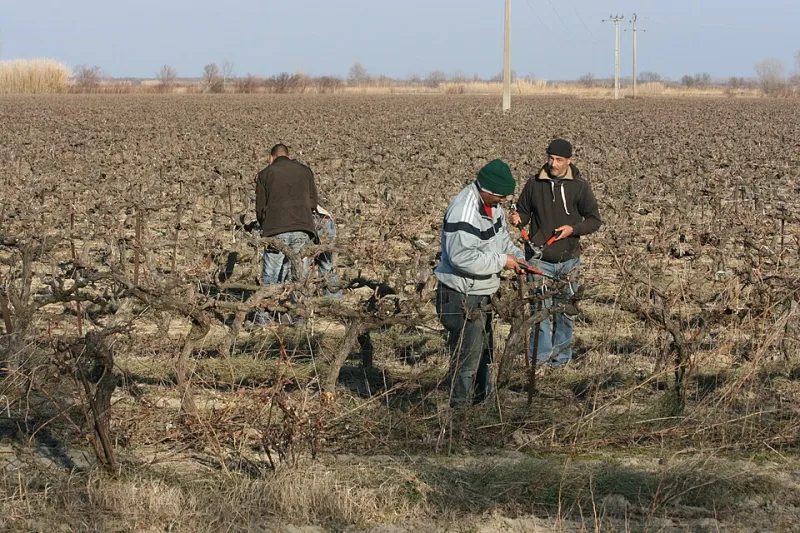
Photo: Deuxtroy, CC BY-SA 3.0, via Wikimedia Commons
January is a practical month in a UK vineyard. The vines are dormant, the fruit is long gone, and the year’s work begins with a pair of secateurs and a pile of last season’s growth. Most of that material is composted, shredded or burned. Some of it, with the right conversation, can become the most interesting thing on a winter table.
Vine prunings are not a free-for-all. They are an agricultural by-product, and the person who owns the vines gets to decide what happens to them. But asked for properly, they offer something the usual evergreen staples cannot: local provenance, graphic line, and a texture that looks like the season it came from.
Start with the ask, not the secateurs
Do not turn up at a vineyard in late January with a boot full of empty crates and a hopeful expression. Ring or email first. Explain that you style tables or venue installations, that you are interested in a small amount of pruned material, and that you will collect only what the grower is happy to set aside.
Be specific. Ask whether they have a pruning pile you can take from, roughly how much you need, and when it will be available. Make it clear that you will not cut anything yourself. A grower may be happy for you to take a few armfuls from a designated heap; they will not be happy to find you halfway down a row with your own snips.
Ask about sprays, too. Vineyards operate to different schedules, and you do not want material that has been recently treated. A responsible grower will tell you what is and is not suitable. If they say no, accept it. A thank-you note, a credit on social media, or a bottle of something local is a nice gesture, but it is not a substitute for permission.
What to collect, and what to leave
Dormant vine canes are the long, woody shoots from the previous year. They are flexible enough to curve, but sturdy enough to hold a line. Tendrils are the curly, spring-like bits that helped the vine climb; they are beautiful, brittle, and best treated as delicate accents rather than structural workhorses.
Collect from the pile rather than the vine. Choose clean, unbroken canes with a bit of natural curve. Look for tendrils that are still intact, not crushed or damp. Leave anything that looks diseased, mouldy or generally mysterious. Vineyards have enough to manage without you carrying problems from one block to another.
Bring gloves, secateurs, a flat box or crate, and a dry day if you can get one. Keep lengths manageable. A cane that is two metres long may look heroic in the vineyard and impossible in the van. Cut to the size you will actually use, and leave the rest behind.
If you are working with a wall-trained vine in a garden, the same rules apply. Ask the owner before you take anything, even if the vine is spilling over a path. A wall vine is not a public resource; it is someone’s plant, and it has a pruning plan of its own.
Conditioning the curly stuff
Tendrils are the divas of the bunch. They do not want to be soaked, squashed or left in a warm car. Shake them out, inspect them, and remove any brittle curls that will only snap later. Store them loose in a cool, dry place, away from radiators. Use them within a few days if you can.
Bare canes are more forgiving. Recut the ends if you are standing them in shallow water, and give them a few hours to drink before you start bending them into shape. If the canes are for a dry installation, keep them cool and dry instead. Either way, sort them by curve and thickness before you begin. A box of mixed lengths is a box of indecision.
Do not try to make vine canes do something they hate. If a cane wants to arc left, let it arc left. The material has a memory, and forcing it into tight spirals usually ends in a crack and a quiet word with yourself.
Tables: low coils, not high drama
On a table, vine prunings work best as a line, not a pile. Lay a few long canes along the centre of the table as a skeleton, then thread evergreen, dried grasses or berries through them. Coil a tendril around a candle base or a place card. Let one or two curls sit beside a napkin and leave it at that.
Keep the scale low enough for conversation. A table is not a floristry competition. Vine prunings are dry and flammable, so keep them well away from naked flames. If you are using candles, choose a holder that contains the flame, or use LED candles and save the real ones for another part of the room.
The colour is useful, too. Bare vine is grey-brown, buff and slightly silvery, which sits beautifully with off-white linen, dark green foliage and the sort of muted winter palette that looks better in November light than it does in a catalogue.
Venue installations that know when to stop
For venue work, vine prunings can make a lightweight arch, a hanging hoop or a mantelpiece line without the bulk of imported branches. Fix them to freestanding structures rather than drilling into old walls. Check with the venue before you hang anything, and keep dry material away from heat sources, exits and walkways.
Pair vine with evergreen rather than letting it take over. The contrast is the point: the softness of ivy or fir against the scratchy, graphic line of bare cane. Add a few tendrils at eye level and let the rest recede. If the installation starts to look like a craft fair had a clear-out, pull back. The best vine styling looks borrowed, not bought.
Why this material earns its place
British vine prunings are local, seasonal and full of story. They come from a crop that is grown for wine, not for decoration, and that makes them feel like a genuine offcut rather than another product in a bucket. They are not a replacement for evergreen staples; they are a counterpoint. A reminder that winter styling does not have to be imported, fluffy or perfectly round.
Use them with permission, condition them with care, and stop before the table disappears under the vine. A few bare canes, a curl or two, and a little restraint will do more than a vanload of material ever could.