The Boundary Notebook: Reading November Hedges Before You Cut a Stem
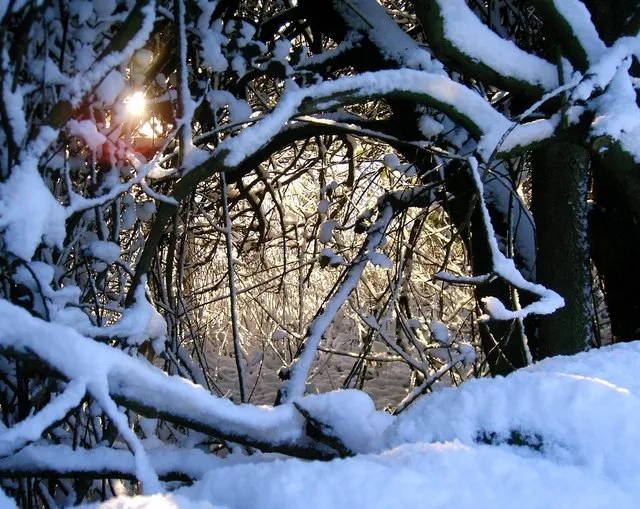
Photo: Julie Montgomery, CC BY-SA 2.0, via Wikimedia Commons
There is a particular kind of November light that makes a hedge look finished. The leaves are mostly down, the last hips are glowing, and every twig is suddenly visible. It is tempting to see that as the end of the styling year. In practice, it is the most useful moment to look closely. A hedge in mid-November is a ledger of what held up, what faded and what will be worth returning to. For small shops, stylists and event planners, one slow walk along a garden boundary or a permitted local hedge can replace a lot of guesswork later.
This is not a foraging spree. It is an audit. The aim is to notice, record and leave things alone where they belong. Think of it as reading the boundary before you ask anything of it.
Start with permission and a slow first lap
Take the first lap without secateurs. That sounds obvious, but the hand likes to get ahead of the eye. Walk the boundary as if you are inspecting a stockroom you cannot buy from yet. Note who owns the land, where public access begins and ends, and whether the hedge is part of a garden, a farm boundary, a verge or a shared space. In the UK, wild hedgerows are valuable habitat and are protected in various ways. Even where cutting is legal, it is not automatically sensible. If you are unsure, ask. If it is not your boundary, assume you are a guest.
A garden boundary is often the easiest place to start. You can observe it repeatedly, compare one week with the next and plan any cutting with the owner. For a local hedge, permission matters more than enthusiasm. A quick conversation with a landowner or site manager can turn a vague idea into a proper arrangement for next autumn. It also gives you a contact for 2027, which is worth more than a armful of branches.
Four things worth noticing
Seed heads come first because they are so easy to miss once they have collapsed. Look for the silhouettes: teasel, knapweed, wild carrot, hogweed and the umbellifers that hold their shape against a grey sky. Notice whether they are still standing, whether they have shattered, and whether they look sturdy enough for styling. A seed head that is already dropping is not a failure; it is doing its job for wildlife. Make a note of the ones that remain architectural, then leave them be unless you have a genuine, permitted reason to cut.
Berry colour is the second marker. Haws, hips, sloes and the last elderberries give a useful read on the season. Note the shade rather than just the presence: deep red, almost black, dusty blue, bright scarlet. Note abundance too. A hedge with a few hips is not a shortage; it is a larder. For styling, cultivated berries and garden-grown stems are usually the more reliable route. The audit simply tells you what colour story the local landscape is telling this month.
Bare structure is the third thing, and perhaps the most useful for event work. Look at the shape of the branches, the density of the twigs and the way the hedge holds itself without leaves. Hazel, birch, willow and field maple all read differently in winter. Some are straight and upright; others arch or tangle. Photograph the ones with good line. A single strong branch can do more for a table than a dozen fussy stems.
Finally, note promising cutting material. This might be a garden shrub that has grown too leggy, a boundary hedge that needs a genuine winter trim, or a patch of evergreen that can spare a few stems. Be specific. Write down the plant, the approximate quantity, the condition and the access. Do not strip a hedge because it looks generous. Take only where regrowth is sensible and where the owner has agreed.
Record it like a stock list, not a poem
The recording method should be simple enough to use in the rain. A phone note is fine. A voice memo is better if your hands are cold. Photograph the same view from the same spot each time so you can compare. Use a few codes if it helps: S for seed heads, B for berry colour, A for architecture, C for cutting candidate. Add the date, the weather and the initials of anyone who gave permission.
At the end of the walk, write one line about what surprised you. That line is often the most valuable part. Perhaps the hedge has more winter structure than you expected. Perhaps the colour has gone over earlier than last year. Perhaps a local grower has a stand of hazel that could be cut in January. These small observations are the beginning of a boundary book, and a boundary book is simply a more honest way of planning.
What to leave untouched
Leave the berries. Leave most of the seed heads. Leave the dense centre of the hedge alone. That tangle is shelter, and in a cold snap it matters more than any styling brief. Avoid cutting wild hedges in the nesting season, and avoid tidying a boundary just because it looks untidy to a human eye. A hedge that is doing very little for a centrepiece may be doing a great deal for birds, insects and small mammals.
This is not a reason to avoid natural styling. It is a reason to source it well. Garden-grown material, responsible growers and repeat suppliers can give you the shapes you want without asking a wild hedge to pay for them. The audit helps you tell the difference between what is available and what is appropriate.
Turning the audit into a 2027 sourcing plan
By the end of November, sit down with your notes for twenty minutes. Group the findings into structural branches, seed heads, evergreens and colour. Then ask what you actually used this season and what you wished you had. For a small shop, that might mean ordering fewer, better stems and agreeing a January delivery instead of panic-buying in December. For an event planner, it might mean mapping venues to local sources and booking a grower before the spring rush.
Make one or two calls while the observations are fresh. Ask about late-season cuts, quantities and lead times. Confirm whether delivery is possible in the first weeks of 2027, when the styling calendar is quieter but the material is still good. The point is not to hoard. The point is to replace a rushed scramble with a short, reliable list.
An hour in November will not solve the whole year. But it will make next autumn less mysterious. Walk the boundary, write down what you see, leave the larder for wildlife and turn the rest into a plan. That is a very Brook & Vine kind of preparation: quiet, seasonal and much calmer than a last-minute dash.