The One-Stem Rule: Winter Styling That Knows When to Stop

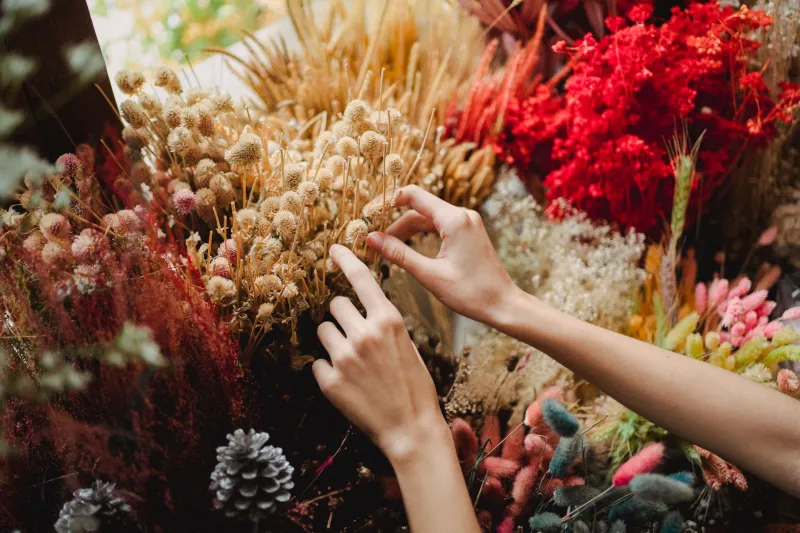
Photo: single dried branch in ceramic vase minimal winter interior UK natural styling, via wallpapers.com
Winter styling has a habit of overfilling. By the time November settles in, it is easy to pile a table with candles, cones, ribbons and three kinds of foliage, then wonder why the room feels busier rather than warmer. There is another way, and it is quieter: choose one stem, give it space, and let it do the talking.
The case for a single branch is not about being austere. It is about editing. One well-chosen stem can bring height, texture and a sense of the garden indoors without turning a corner into a craft stall. For UK homes, small shops and event venues alike, it is often the most practical kind of winter styling — and the easiest to live with through December 2026.
Why one stem can hold a room
A single stem works because it gives the eye somewhere to land. A crowded centrepiece asks you to look at everything at once; a solo branch asks you to notice line, shadow and shape. That is especially useful in smaller British rooms, where a big arrangement can swallow the table or block the view across a shop floor.
There is also a seasonal logic to it. Winter light is low and directional. A bare branch or dried seed head casts a cleaner shadow than a dense bouquet, and that shadow becomes part of the styling. In a hallway, a village hall or a marquee, one stem can create a focal point without competing with the architecture.
This is not minimalism for its own sake. It is restraint with a purpose: fewer elements, better chosen.
Choosing a stem with presence
Not every branch earns a solo spot. Look for something with a strong silhouette — a curve, a kink, a clean vertical line or a generous seed head. British-grown options are plentiful: twisted hazel, birch, willow, dried hydrangea heads, allium seed pods, teasels, honesty and eucalyptus all hold their own. A single stem of each is often enough; together they can look like a hedge in a hurry.
Proportion matters more than price. As a rough guide, aim for a stem that is around one and a half to two times the height of the vase. A narrow-necked vessel will hold a wayward branch upright without forcing it. If the stem is heavy, add a little sand or small pebbles to the base for stability.
Choose a stem that looks good from more than one angle. You will see it from the sofa, the doorway and the till point, and it should not collapse into a stick when viewed side-on. Give it a gentle shake before buying: if it sheds heavily, it may not last the season.
Where a single stem earns its keep
In a home, the obvious places are the hallway console, the dining table, the bedside table and the mantelpiece. A single stem on a bedside table is particularly good in winter: it gives you something soft to look at before sleep without turning the room into a florist’s fridge. In a dining room, one tall stem in a slim vase leaves room for serving dishes and conversation.
For small shops, a solo stem is a practical way to style a till point, a window display or a fitting-room shelf. It signals care without demanding much water or attention, and it does not obscure stock. A branch in a simple ceramic vase can also make a shop window feel considered rather than crowded — useful on a high street where every window is competing for attention.
At events, the same principle scales up. Instead of one large centrepiece per table, try one stem per table in matching vessels, or a single statement branch at the welcome table, bar or altar. In a barn, church or marquee, one tall stem can draw the eye through a large space far more effectively than a cluster of small arrangements. Keep repeating elements identical so the effect reads as calm, not accidental.
Care through November and December
Fresh stems need a little routine. Cut the base at an angle, strip any leaves that would sit in water, and change the water every few days. Keep the vase away from radiators, open fires and direct sun, and mist any evergreen foliage now and then if the room is dry. Re-cut the stem when you change the water; it helps it keep drinking.
Dried stems ask for the opposite: keep them dry. Avoid damp windowsills, steamy bathrooms and anywhere the branch might get knocked. A dried allium or hydrangea head will hold its shape for weeks if it is left alone. If a stem starts to droop, shorten it rather than trying to prop it up — a shorter stem in a smaller vase often looks better than a tired tall one.
In shops and venues, think about safety as well as style. Use a stable vase, keep water away from electrics and consider dried stems where there is a risk of spills. If an event runs for several days, check the water daily and top up as needed.
The quiet confidence of stopping at one
There is a particular kind of confidence in stopping at one. It says the room is finished, not unfinished. It leaves space for the things that matter in winter: warm light, a clear table, a conversation that is not interrupted by a centrepiece.
As we head through November and into December 2026, try giving one branch the room it deserves. You may find that a single stem carries the whole space better than a crowd ever could.